History, ethnology, paleontology, nature, gastronomy, oenology, more than 100 km2 to explore and enjoy.

ALPUENTE


The remains of the Jurassic, the Muslim beauty, the sobriety of the Romanesque, the splendor of the medieval period, the life of its citizens in the 19th and 20th centuries… all this and more can be seen walking through the Villa de Alpuente.
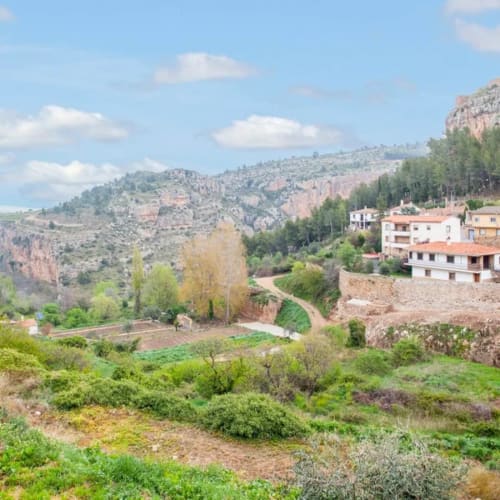
Rustikalpuente hotel nestled in Spanish countryside with terracotta buildings, olive trees, and rocky hillside landscape


Located in the upper area of the La Serranía region, just over an hour from Valencia. The town of Alpuente still preserves the vestiges of its splendid past, housing remains from the Jurassic, the Bronze Age, through the Iberians, Romans and Arabs. In the 7th century it became part of Al-andalus and in the year 1031 it was declared an independent taifa. Such was its economic and political prestige that it came to mint its own currency. Alpuente was the capital of a large territory that today would be equivalent to the regions of Serranía and Rincón de Ademuz, as well as Sinarca and Arcos de las Salinas.
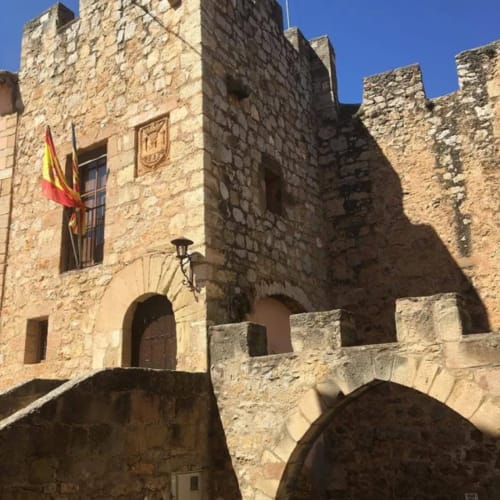
Medieval stone castle with Spanish flag, featuring arched entrance and crenellated towers at Rustikalpuente


It was conquered by the Cid in the year 1089 and in 1236 after being conquered by King James I, Alpuente continued to be a place of exceptional importance. In the years 1319 and 1383 the Cortes of the Kingdom of Valencia met there. A building of singular beauty in Alpuente in its old Aljama, which currently houses the town hall. The Arab Contracting and Government Exchange met there. In the 16th century, a magnificent town hall was attached to it. Of its majestic castle, the best preserved part is the Keep and the cisterns and kitchens, recently restored. It was built in the Muslim era and inhabited until the 19th century, being a stronghold in the Carlist Wars.


Paleontology

Imagining what the Earth was like millions of years ago is possible, thanks to the work carried out by paleontologists, more than 20 years ago when the first fossils were found.

All of this can be visited in the Paleontological Recovery classroom, where the remains found are recovered and studied and displayed in all their splendor in the Paleontological Museum.

museopaleontologicoalpuente.net

Bodega Terra d’Art (Ahillas)

The young winemaker Juanjo watches over each of the vineyards, chooses each of the grapes and works tirelessly in the production of great signature wines. He conducts some memorable tastings after visiting the winery.

bodegasterradart.com

Hiking

Its trails through fantastic places such as Bomba or La Hoz, the sources of Cabezo, Hacha, Arquela, the mountains of Cabezo, Cerro Negro or Castillo del Poyo, abandoned villages such as Hortichuela, Cañada Seca or Benacatázara, moments of respite to enjoy nature in its purest form.

Baldovar Winery 923

Exciting project of a group of young people, who have acquired the old Baldovar wine cooperative, to make great wines.

MTB routes

With a network of forest tracks, routes between villages and spectacular mountains, there are enough routes in the area to be able to bring your bicycle and not get off it.

History, ethnology, paleontology, nature, gastronomy, and wine—over 100 square kilometers to explore and enjoy.